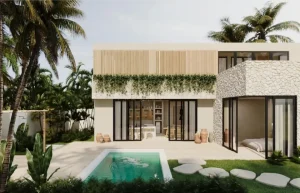
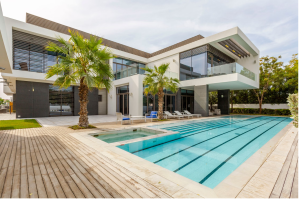
Ask any experienced Bali property owner what actually keeps them up at night, and it’s rarely the leasehold paperwork. It’s the phone call about a hairline crack running up a load-bearing wall. Or the ceiling stain that means water has been getting in for months before anyone noticed.
Bali’s tropical climate — relentless humidity, months of heavy rain, salt air near the coast — is brutal on buildings that weren’t engineered for it. And in a market where “warranty” can mean anything from six months of goodwill to a decade of genuine legal cover, most investors have no easy way to tell a well-built villa from one that’s quietly deteriorating behind fresh paint.
That gap is exactly why every villa in Fabric’s portfolio comes with a 10-year structural warranty and a 5-year waterproofing warranty. Here’s what that actually means, why it’s well above what most of the market offers, and what it should tell you about how a villa was built in the first place.
The Industry Standard Is Lower Than You’d Think
Warranty terms across Bali’s villa construction market vary wildly, and the fine print matters more than the headline number. It’s common to see:
- 6-month “finishings and snag” warranties — covering cosmetic touch-ups only, expiring well before a single rainy season has fully tested the build
- 9-month roof warranties paired with much longer windows or membrane warranties, creating a patchwork where the parts most exposed to weather are covered the shortest
- “5–10 year” warranties advertised without specifying what’s actually included, which can mean anything from full structural cover to a narrow list of components
None of this means every builder in Bali is cutting corners. But it does mean the burden is usually on the buyer to read the contract closely, understand exactly what’s covered, and ask what happens after the warranty period ends — because in a market this competitive, vague warranty language is often a signal of vague construction standards underneath it.
What Indonesian Law Actually Requires
Indonesia’s construction services law does establish a baseline structural liability period of up to 10 years for building defects — so a long structural warranty isn’t just a marketing figure, it reflects a real legal standard for how buildings are expected to perform.
In practice, though, that legal protection puts significant weight on the owner. If a structural issue appears years after handover, proving it stems from a construction defect — rather than normal wear, a lack of maintenance, or an owner’s own renovation — typically requires an independent engineering assessment, and the burden of that proof falls on the property owner, not the builder. If the original contractor has since dissolved the business or moved on, that legal right can become very difficult to actually exercise.
This is the detail most warranty conversations skip: a warranty is only as good as the company standing behind it years later. A 10-year structural warranty from a developer who still owns and manages the property is a very different thing from a legal right against a contractor who may no longer exist.
What Fabric’s 10-Year Structural Warranty Covers
Structural warranty refers to the load-bearing bones of the villa — the elements that, if they fail, threaten the safety and integrity of the entire building:
- Foundations and footings
- Load-bearing walls and columns
- Structural beams and slabs
- Roof structure (the frame itself, not just the covering)
Because Fabric’s construction arm, Lumina Build, designs and builds every villa we go on to sell and manage, structural accountability doesn’t disappear at handover the way it can with a one-off contractor relationship. The same standard gets applied whether we’re building for an investor’s portfolio or, as we tell every client, for ourselves.
What the 5-Year Waterproofing Warranty Covers
Waterproofing rarely gets the attention it deserves at the point of purchase — it’s invisible when it’s working and catastrophic when it isn’t. In Bali specifically, water intrusion is consistently cited by architects and project managers as one of the most common causes of early building deterioration, alongside poor drainage and untreated timber.
Fabric’s waterproofing warranty covers the membrane systems and treatments applied to the areas most exposed to Bali’s climate:
- Roof waterproofing membranes
- Bathroom and wet-area waterproofing
- Pool structure waterproofing
- Below-grade and foundation moisture barriers
Five years is long enough to carry a villa through multiple full rainy seasons — the real stress-test for any waterproofing system — while it’s actively operating as a rental property, not sitting empty.
Why This Actually Matters for Your Returns
A warranty isn’t just a document that sits in a drawer. It directly protects the two things that determine whether a villa investment performs:
Your occupancy and reviews. A single water stain or musty smell is enough to trigger a guest cancellation and a bad review — and reviews compound over time in a way that’s expensive to reverse. Waterproofing failures hit rental income long before they show up as a structural problem.
Your capital. Structural remediation on a villa that’s already operating isn’t a cosmetic fix — it can mean months of lost bookings on top of the repair cost itself, which for serious structural issues can run into the tens of thousands of dollars. A warranty that’s actually backed by a company still standing behind the build is what keeps that risk off your balance sheet.
Your resale value. A documented warranty history is a due-diligence asset for the next buyer, not just you. It’s evidence, not a promise — the same standard we apply to reporting your rental returns.
What to Ask Any Bali Developer Before You Buy
Whether you invest with Fabric or anyone else, these are the questions worth asking before you sign:
- What exactly does the structural warranty cover — foundations and beams, or just “the structure” in vague terms?
- Is waterproofing covered separately, and for how long?
- Who is legally and financially responsible for a claim — the original contractor, or the company you’re actually buying from?
- Will that company still exist and be operating in this market in 5–10 years?
- Can you see documentation of how past structural or waterproofing issues were actually handled?
If a developer can’t answer all five clearly, that’s worth knowing before you commit capital — not after.
The Fabric Standard
We build every villa through Lumina Build and manage every villa through Fabric — which means the team responsible for the warranty is the same team that built the property and the same team collecting your rental income every month. There’s no handoff where accountability gets lost. It’s one of the reasons every property in our portfolio carries a 10-year structural and 5-year waterproofing warranty as standard, not as an upsell.
Frequently Asked Questions
What’s the difference between a structural warranty and a waterproofing warranty? A structural warranty covers the load-bearing elements that keep a building standing — foundations, walls, beams, and roof structure. A waterproofing warranty covers the membranes and treatments that keep water out of the building, which is a separate (and in Bali’s climate, equally critical) system.
Is a 10-year structural warranty required by Indonesian law? Indonesian construction law establishes a structural liability period of up to 10 years, but enforcing it typically requires an independent engineering assessment, and the burden of proof falls on the property owner. A warranty backed directly by the developer removes much of that burden.
Why is waterproofing warrantied separately from the rest of the structure? Because it fails on a different timeline and for different reasons. Waterproofing is under constant stress from Bali’s rain and humidity and is one of the most common sources of early villa deterioration, so it warrants its own dedicated coverage period rather than being bundled into a general warranty.
Does the warranty transfer if I resell the villa? This depends on the specific terms in your purchase agreement — it’s a detail worth confirming with your investment advisor before you buy, and one we’re happy to walk through directly.
What happens after the warranty period ends? Ongoing maintenance becomes part of ordinary property management from that point on — which is exactly why professional, full-service management matters as much as the initial build quality.
Want to see how warranty terms are structured in a live investment? Book a free consultation with a Fabric advisor, or explore the BARU Collection to see the standard we build to.